

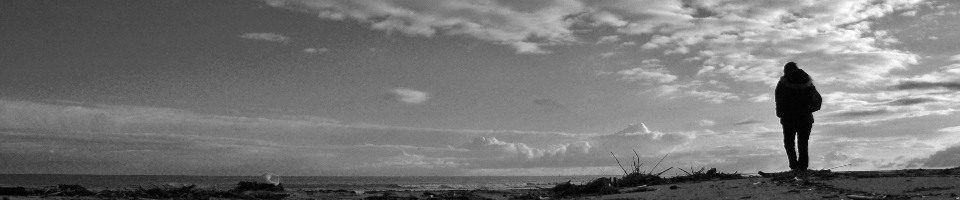
As a child, I was lonely. An only child (of course—no one knew about my twin brother). My childhood home was dominated by a controlling father and an insecure mother. Intellectual pursuits were encouraged, but emotional expression was not. I had little contact with my relatives, who were few and anyway lived far away. I was consistently top of my class and year at school. I was more of a bookworm than a street kid. When I was invited to birthday parties, sooner or later I would sit in a corner with a book while the others played. In high school, I had a best friend whose family I admired for the liveliness of their communication with each other. I tended to help everyone else with their homework or explain things to them rather than being a real friend. Even in the girls' or junior women's quadruple sculls with coxswain, in which I rowed for years in changing crews, I was always something of a fifth wheel. But I thought I had come to terms with all of that pretty well. That's just how it was, and I coped with it.
And even today, I prefer to sit on the balcony with a book rather than mingle with people. I work mainly alone, but at least I have learned to appreciate and make use of loose networks.
Not loneliness, but separation is something of an anthropological constant. Life is separation. Birth separates us from the being with whom we were intimately connected until then. It forces our entire organism to breathe on its own from one moment to the next, to keep our metabolism going, to cope with the immediate demands of the environment. At the same time, however, humans are, biologically speaking, immature babies. While the offspring of many animal species can walk immediately and perhaps even provide for themselves fairly quickly, human children require many years of intensive care. And even an adult, left to fend for themselves in the Stone Age wilderness, would have little chance of survival. We humans depend on group solidarity for our survival. Being excluded from the group almost automatically meant death. It was no coincidence that criminals in Iceland were simply banished to the inhospitable highlands; only very few survived there.
Loneliness is deadly, literally.
I experienced this firsthand a few years ago. There was an environment in which I trusted, in which I opened myself and my heart – as much as I was able to at the time. And then the group turned against me. It doesn't matter here what exactly happened or why, nor does it matter that I am still deeply grateful to those involved for the experiences that were and still are possible as a result. My point is that I was excluded from the group. Not openly, but very subtly. The protagonists may not even have been aware of it. But the events left me with an energetic wound that is still palpable now, five years later. And it took me years to understand that being excluded from the group actually almost killed me. Not only because, out of sheer desperation, I was not too far from jumping off the bridge, but because it reactivated precisely this primal fear and primal vulnerability of humans in a potentially hostile wilderness. I had lost a home, and that led directly to loneliness – and almost to death.
There is also a general conflict inherent in shamanic work. On the one hand, it is about connection and belonging. It took me a long time to realize that it is above all the longing for connection – with myself, with the earth, with everything – that draws me to shamanic work. On the other hand, shamanic work makes you lonely because it is difficult to share the often quite extreme experiences with someone else and find understanding for your own experiences; and also because leadership, for example leading a group, automatically brings loneliness with it. Perhaps there is even a connection the other way around: shamanic work requires loneliness. My spirits once expressed it this way: “You are completely alone.” At first, I didn't find that funny at all, since I had just realized that connection was what mattered to me.
So far, so good. For now.
But was there perhaps more to it than that? In films and stories, I have always been deeply moved by scenes that dealt with loneliness at their core. The end of the film Titanic. Lassie the dog finding her way home. Or even a sentence written by someone somewhere on social media, referring to “Memory” from “Cats”: “The old cat, waiting sleeplessly in the night for the new morning and for the hand that will stroke her a little...” The sentence hit me, completely unprepared, right in the heart (so much so that it ended up in a file titled “Loneliness” on my computer). It does so again now as I write.
And again and again, I encountered loneliness in deep trance sessions. An ocean of loneliness, empty, without shores or support, never ending, nowhere ending. Just as regularly, it was only a very small step from there to surrender, dissociation, and death, to the point where the world around me began to shrink and become quieter and quieter (and to this day, I'm not sure if I might not have actually died—physically—in that session if I had gone one millimeter further at that point). This is how I felt when I experienced the loss of my twin brother and when I found out that no one had welcomed me into life. The facilitator of these sessions once commented on one of my older transcripts, saying that the entire transcript left him with the impression of great loneliness, of not being seen, and of many efforts to be seen.
To make matters worse, in these deep trance sessions I have now also come across perceptions of abuse. For years, I said no, there was definitely nothing. But almost every time in the sessions, my body began to react in a way that always looked like defense and attempts to escape. However, this could never really be attributed to a specific story, and for years it remained a mystery what the reason for these reactions was. A few weeks ago, for the first time, the images became more specific, which made it possible to locate it in space and time. And apart from horror and disgust, one particular feeling prevailed: the feeling of having been betrayed, which in turn led to loneliness once again.
Abuse led to loneliness back then, and it does so today as well. This is because it is associated with a deeply rooted, immensely difficult-to-overcome prohibition on expressing the experience, on being seen. What's more, I'm afraid to tell people about it because I fear that I won't be believed – that I will be rejected, not taken seriously. Even someone who had always followed my earlier reports about the sessions with great interest said, “I would like to believe you.” It later turned out that the sentence was meant differently, but for me at that moment it meant: I am not believed. Yet it would be so urgently necessary to express what is there. It would be so urgently necessary for someone to be there to hold the space for me, to hold me, because I often cannot do that myself at the moment. That, too, is loneliness.
As always, it ultimately comes down to accepting all of this unconditionally and in all its depth... and from there, making a conscious decision for life, in all surrender, beauty, and clarity. One of my session notes reads: "Ultimately, I made a decision for life that night. A decision for life that is fully aware that this loneliness permeates everything and is basically ‘incurable’, and that accepts this deeply. I don't mean a loneliness that would manifest itself in any way in daily life, but a much more fundamental one that is there, just as the universe is there, for that matter. Without the universe, life would be inconceivable; there is no life ‘outside’ the universe. It's roughly the same with this loneliness."
These days, I have understood something else. Loneliness seems to be not only a theme in life, but also a task. It's as if my soul chose this incarnation in order to experience this state in all its aspects, with all the situations that can lead to it. On the one hand, this realization was a relief, because it revealed a certain meaning in all of this. On the other hand, it led directly to a complete collapse of strength, because at the same time there is a deep hopelessness, an inevitability: there is nothing outside this loneliness.
There is only the possibility of trying to cope with it. Consciously choosing this very life. Saying yes to life. Experiencing what needs to be experienced and healing what can and should be healed.
Once again, “Cats”: “If you touch me, you'll understand what happiness is.”
(Winter 2019/2020)